Available 24/7 312-535-4625

-

- Home
- About Us
- Attorneys
- Practice Areas
- Nursing Home Abuse and Neglect
- Wrongful Death
- Bed Sores
- Sepsis
- Infection
- Falls
- Fractures
- Life-Threatening Injuries
- Wandering and Elopement
- Physical Abuse
- Choking
- Burns
- Sexual Abuse
- Malnutrition
- Dehydration
- Medication Errors
- Breathing Tube Injuries
- Unreasonable Restraint
- Lack of Medical Care
- Inadequate Staffing
- Elder Abuse
- Alzheimer’s and Dementia Patients
- Nursing Home Care Act
- Assisted Living Lawsuits
- Rehabilitation Facility Lawsuits
- Nursing Home Abuse and Neglect
- Our Victories
- Info Center
- Blog
- Contact
Can You Sue if a Nursing Home Bedsore Leads to Amputation?
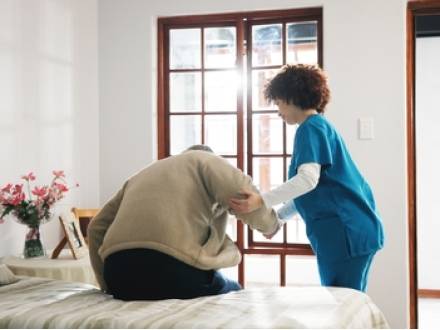 Nursing homes often present a clean image to the public, assuring families that their loved ones are being well taken care of. Unfortunately, what goes on behind closed doors can sometimes tell a different story. Nursing home residents at understaffed or untrained facilities may suffer bedsores, which, if left unchecked, may require amputation. If your loved one had to have a body part amputated due to a nursing home’s negligence, you may be able to sue for compensation.
Filing an injury claim against a nursing home isn’t easy. You may need to supply multiple documents along with credible witness testimony to prove the facility was responsible. At Schwartz Injury Law, our Madison County, IL nursing home neglect lawyers can investigate a negligent facility and gather evidence for your claim. We have secured millions in compensation for past clients who suffered as a result of neglect in nursing homes, so you can trust that your case will be handled by an experienced legal team.
What Is a Bedsore?
Bedsores, also called pressure ulcers, are wounds caused by long periods of staying motionless, with skin pressing against specific body parts. They often form over bony areas like the tailbone, hips, heels, ankles, and elbows. When someone cannot shift their weight, pressure slows blood flow. Without enough blood, the skin and the tissue under it start to break down.
Moisture and friction can speed up the damage. Sweat, urine, or stool can weaken skin. Rough transfers or wrinkled sheets can lead to scarring. Older adults may be at higher risk, especially when other risk factors like diabetes, poor circulation, dehydration, or weight loss are present.
Bedsores are common in long-term care. In fact, the Agency for Healthcare Research and Quality reports that more than 2.5 million people in the United States develop pressure ulcers each year.
Stages of an Untreated Bedsore
Bedsores tend to get worse in distinct stages. Early treatment can stop a small sore from turning into a dangerous wound, but the longer it festers, the more intensive treatment may be required. These stages include:
-
Stage 1 is a warning sign. The skin is still closed, but it may look red or darker than normal, feel warm, or hurt.
-
Stage 2 means the skin has opened. It may look like a blister or a shallow crater. Germs can enter the wound.
-
Stage 3 is deeper. The sore can reach the fat layer under the skin. The wound may drain, smell bad, or show dead tissue.
-
Stage 4 is the most severe. The sore can reach muscle, tendons, or bone. Infection becomes a major risk.
Some wounds are "unstageable" when dead tissue hides the depth, or they start as deep tissue injuries under intact skin.
Holding a Nursing Home Liable for Bedsore Injuries in 2026
In Illinois nursing homes, many bedsores are preventable. Facilities that take proper steps can reduce the risk, even for residents who are very frail. Nursing homes generally have a duty to prevent neglect from occurring, which means watching for early signs and providing preventative care to avoid causing bedsores (210 ILCS 45/2-107).
Prevention starts with a care plan. Staff should identify residents at higher risk and set clear steps, such as repositioning on a schedule, keeping skin clean and dry, and using pressure-relief cushions or mattresses when needed. Staff should also check the skin often. A small color change can be an early sign.
Nutrition and hydration are just as important. Skin heals poorly when someone is not getting enough protein, calories, or fluids. When a resident is losing weight or showing signs of dehydration, staff should respond.
Bedsores can also be a staffing issue. Turning and cleaning a resident takes time and training. When a facility is short-staffed or poorly supervised, residents who cannot move independently can be left in the same position for too long.
Damages Caused by Bedsore Amputations
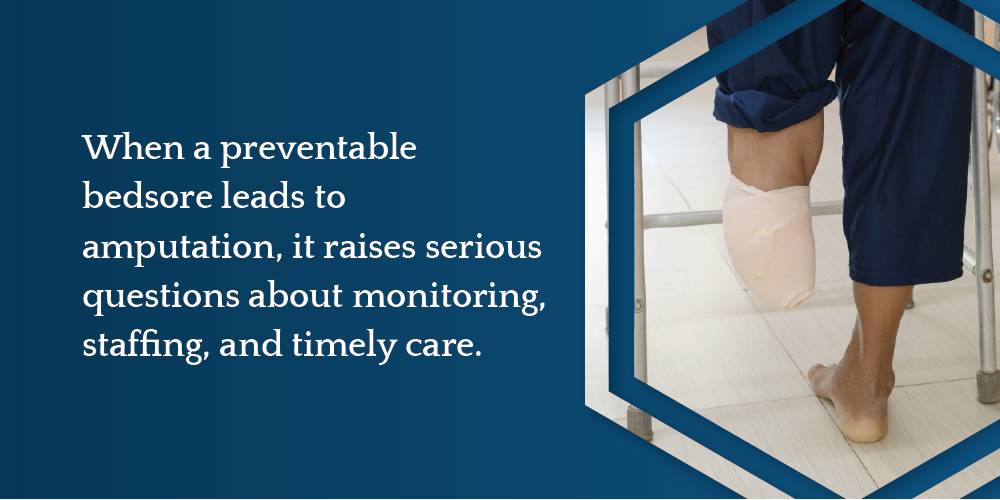
A bedsore can lead to amputation when it becomes deep, infected, and hard to treat. A severe ulcer can cause dead tissue and infection in nearby bone. If infection spreads through the body, doctors may have to remove infected tissue to save the resident’s life.
Some pressure ulcers form on the heel or foot. If blood flow is already poor, the body may not heal the wound. Infection can spread into the bone, called osteomyelitis. When antibiotics and wound care do not work, an amputation may become the only option.
After an amputation, a resident may face long hospital stays, surgeries, wound care, and rehabilitation. Many older adults lose strength quickly after a major infection. Some never return to the same level of independence.
Families often face added costs and stress, including transportation, mobility equipment, and help with daily care. The emotional toll can be heavy, especially when basic prevention steps were missed.
What if a Nursing Home Denies Responsibility for an Untreated Bedsore?
Facilities may claim that bedsores are "unavoidable." Sometimes they are. Many are not. The key question is whether the nursing home took reasonable steps necessary to prevent the wound and to treat it once it appeared.
When a facility denies responsibility, records can fill in gaps of information. Care plans, turning logs, skin checks, wound notes, and photos can show what happened. Missing turning entries, repeated copy-and-paste notes, or vague charting can be cause for concern, suggesting negligence by the staff.
The timing of treatment may play a major role in a bedsore claim. A small sore usually does not become a stage 4 wound overnight. If the wound was only noticed when it was advanced, that could point to poor monitoring. Delays in calling a doctor, ordering supplies, or sending the resident to a hospital can also be cited as evidence of fault.
If you saw the wound or found your loved one left in soiled bedding, be sure to write down dates and details. Our attorneys can help you document clear mistreatment and neglect at the facility to strengthen your claim.
Contact a Will County, IL Nursing Home Injury Lawyer
A bedsore that leads to amputation is a catastrophic injury, and may be a sign that a resident was not protected. If your loved one suffered a severe pressure ulcer in a nursing home, you may have legal options.
At Schwartz Injury Law, we can take aggressive action to help your loved one recover from this devastating loss. Call 312-535-4625 or contact our Madison County, IL nursing home injury attorneys to schedule a free consultation.
Contact Us
 The use of the Internet or this form for communication with the firm or any individual member of the firm does not establish an attorney-client relationship. Confidential or time-sensitive information should not be sent through this form.
I have read and understand the Disclaimer and Privacy Policy.
CHICAGO OFFICE
60 W. Randolph Street, Suite 300,
Chicago, IL 60601
312-535-4625
ORLAND PARK OFFICE
14496 John Humphrey Drive,
Orland Park, IL 60462
708-928-8685
ROCKFORD OFFICE
7210 East State Street, Suite 102A,
Rockford, IL 61108
815-315-0933
GLEN ELLYN OFFICE
519 N. Main Street, Unit 1BN,
Glen Ellyn, IL 60137
630-866-8843
ELMHURST OFFICE
360 West Butterfield Rd., Suite 300,
Elmhurst, IL 60126
630-884-5178
PEORIA OFFICE
456 Fulton Street, Suite 425,
Peoria, Illinois 61602
309-503-1126


Contact Our Firm
The use of the Internet or this form for communication with the firm or any individual member of the firm does not establish an attorney-client relationship. Confidential or time-sensitive information should not be sent through this form.
I have read and understand the Disclaimer and Privacy Policy.