Available 24/7 312-535-4625

-

- Home
- About Us
- Attorneys
- Practice Areas
- Nursing Home Abuse and Neglect
- Wrongful Death
- Bed Sores
- Sepsis
- Infection
- Falls
- Fractures
- Life-Threatening Injuries
- Wandering and Elopement
- Physical Abuse
- Choking
- Burns
- Sexual Abuse
- Malnutrition
- Dehydration
- Medication Errors
- Breathing Tube Injuries
- Unreasonable Restraint
- Lack of Medical Care
- Inadequate Staffing
- Elder Abuse
- Alzheimer’s and Dementia Patients
- Nursing Home Care Act
- Assisted Living Lawsuits
- Rehabilitation Facility Lawsuits
- Nursing Home Abuse and Neglect
- Our Victories
- Info Center
- Blog
- Contact
Top Causes of Organ Failure in Nursing Home Residents
 When a vital organ stops functioning, it can have a drastic effect on your health. This medical emergency can be even more serious for older people with already delicate health. If your loved one suffered organ failure in a nursing home, you may wonder if the facility shares responsibility for what happened.
At Schwartz Injury Law, we have investigated many cases of nursing home neglect across the state of Illinois. Our thorough approach has resulted in numerous victories, with settlements and verdicts adding up to millions of dollars. Our Winnebago County, IL nursing home neglect lawyers can review the events leading up to your loved one’s emergency and help you take appropriate legal action.
Common Types of Organ Failure in Elderly People
Organ failure happens when an organ can no longer do its basic job. In older adults, this risk increases with age, chronic illness, and reduced mobility. The most common forms seen in nursing home residents involve the kidneys, lungs, heart, and liver. Kidney failure may follow dehydration or infection. Respiratory failure often develops after pneumonia. Heart failure can worsen when infections or poor nutrition strain the body. Liver failure, while less common, may appear when medications are mismanaged or when malnutrition is severe.
Many residents already live with fragile health. Even a short lapse in care can push a manageable condition into a medical crisis. That is why consistent monitoring matters. When warning signs are missed, organ failure can progress quickly and become life-threatening.
Four Leading Causes of Organ Failure in Nursing Homes
In many cases, organ failure in nursing homes does not begin with a sudden event. It starts with a preventable problem that is ignored or improperly treated. These four causes routinely crop up in investigations of serious injury and death.
Untreated Sepsis
Sepsis is a severe reaction to infection. It can begin with something small, like a urinary tract infection, a pressure sore, or pneumonia. In elderly residents, the signs are often subtle. Confusion, weakness, or a slight fever may be the only clues.
When staff fail to recognize these signs or delay treatment, infection can spread through the bloodstream. This causes inflammation throughout the body. Blood pressure drops. Organs stop receiving enough oxygen. Kidney failure, lung failure, and heart failure can follow in a matter of hours or days.
Prompt treatment with antibiotics and fluids can save lives. Delays can be deadly. Many sepsis cases in nursing homes involve missed symptoms, slow responses, or failure to call for emergency care.
Pneumonia
Pneumonia is a leading cause of hospitalization and death among nursing home residents. Older adults often have weaker immune systems and trouble clearing their lungs. Residents who are bedbound or have swallowing problems face even higher risks.
Poor oral care, improper feeding, and lack of movement all increase the chance of pneumonia. Aspiration pneumonia, caused by food or liquid entering the lungs, is especially common in long-term care settings.
If pneumonia is not treated quickly, it can lead to respiratory failure. Other organs may fail as the body struggles to breathe. Simple steps like monitoring breathing, encouraging movement, and following feeding plans can reduce risk. When these steps are ignored, the consequences can be severe.
Dehydration
Dehydration is one of the most common and preventable problems in nursing homes. Many residents rely on staff to provide water or help them drink. Others have conditions that reduce thirst or make swallowing difficult.
When residents do not get enough fluids, blood volume drops. The kidneys suffer first. Acute kidney failure can develop quickly, especially in older adults. Dehydration also thickens the blood, raising the risk of clots and strokes. It can worsen infections and increase confusion, which leads to falls.
Signs of dehydration include dry mouth, dark urine, fatigue, and confusion. These signs are easy to spot when staff are attentive. When staffing is thin or routines are rushed, dehydration often goes unnoticed until organ damage has already begun.
Malnutrition
Proper nutrition fuels every system in the body. Without enough calories, protein, and vitamins, organs weaken over time. Malnutrition is common in nursing homes, especially among residents with dementia, depression, or swallowing disorders.
Missed meals, rushed feeding, and failure to follow diet plans all contribute. Weight loss may be gradual, but the effects are serious. Malnutrition weakens the immune system, making infections more likely. It reduces muscle strength, including the muscles used to breathe and swallow. It also impairs wound healing.
As the body breaks down its own tissue for energy, organs begin to fail. The heart may weaken. The liver struggles to process toxins. Combined with illness or infection, malnutrition can tip a resident into multi-organ failure.
Why Understaffing Leads to Poor Health Outcomes in Nursing Homes
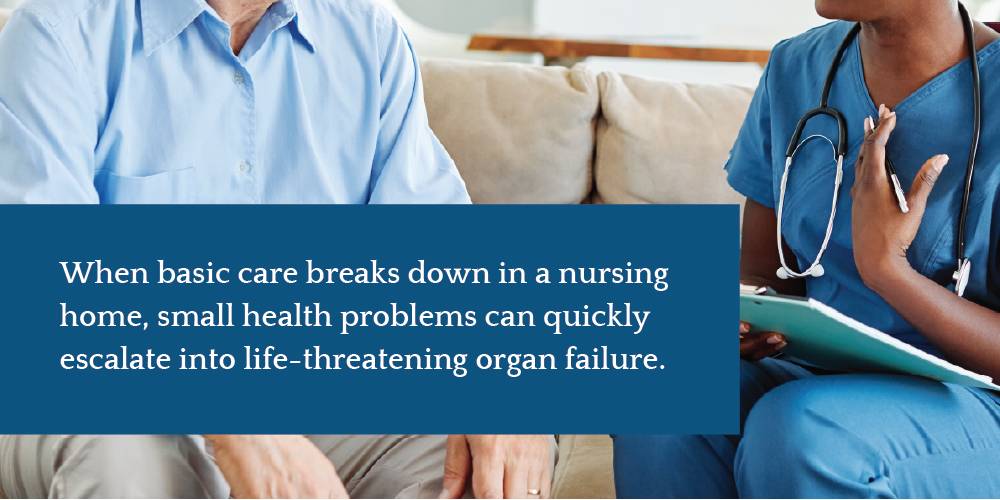
As of 2026, understaffing remains a root cause of many serious injuries in nursing homes. When there are too few aides or nurses on a shift, basic care suffers. Residents may wait too long for help with meals, fluids, or toileting, and changes in condition may go unnoticed.
Staff who are overworked also have less time to observe residents closely. Subtle warning signs of infection or dehydration are easy to miss. Care plans might not be followed. Documentation may be rushed or incomplete. These small lapses in attention can add up until it’s too late to prevent a serious health emergency.
High turnover also plays a role. A recent report from the Long Term Care Community Coalition revealed that employee turnover is high in the average nursing home, just over 50 percent. New or temporary staff may not know a resident’s baseline condition. What starts as a small problem can escalate into organ failure and death.
When Organ Failure in Nursing Homes Leads to Death
When a nursing home resident dies from organ failure caused by neglect or poor care, surviving family members may have the right to file a wrongful death claim. These cases focus on whether the facility failed to meet its duty of care.
The process usually begins with an investigation. Medical records are reviewed to identify warning signs, missed diagnoses, or delays in treatment. Staffing levels, care plans, and internal policies may also be examined. Expert opinions can help explain how proper care could have prevented the outcome.
If the nursing home resident dies from organ failure, a wrongful death claim seeks compensation for losses suffered by the family. This may include funeral expenses, medical bills, and the loss of companionship (740 ILCS 180/0.01). It also holds the facility accountable. Legal action can bring answers and help prevent similar harm to other residents.
Contact a Winnebago County, IL Nursing Home Injury Attorney
If your loved one suffered organ failure in a nursing home, you may have questions about what happened and what comes next. Call 312-535-4625 to schedule a free consultation with our St. Clair County, IL nursing home injury attorneys at Schwartz Injury Law. Your intake will be handled by a real attorney, so you can rest assured that your concerns will be taken seriously.
Contact Us
 The use of the Internet or this form for communication with the firm or any individual member of the firm does not establish an attorney-client relationship. Confidential or time-sensitive information should not be sent through this form.
I have read and understand the Disclaimer and Privacy Policy.
CHICAGO OFFICE
60 W. Randolph Street, Suite 300,
Chicago, IL 60601
312-535-4625
ORLAND PARK OFFICE
14496 John Humphrey Drive,
Orland Park, IL 60462
708-928-8685
ROCKFORD OFFICE
7210 East State Street, Suite 102A,
Rockford, IL 61108
815-315-0933
GLEN ELLYN OFFICE
519 N. Main Street, Unit 1BN,
Glen Ellyn, IL 60137
630-866-8843
ELMHURST OFFICE
360 West Butterfield Rd., Suite 300,
Elmhurst, IL 60126
630-884-5178
PEORIA OFFICE
456 Fulton Street, Suite 425,
Peoria, Illinois 61602
309-503-1126


Contact Our Firm
The use of the Internet or this form for communication with the firm or any individual member of the firm does not establish an attorney-client relationship. Confidential or time-sensitive information should not be sent through this form.
I have read and understand the Disclaimer and Privacy Policy.